Author Archives: austest

Prevent Problems With Water Drainage
27
Dec
2019

Water drainage problems can create a variety of problems and have many causes.

So what measures can be taken to avoid a drainage problem from occurring in the first place?

Identifying the cause of the problem is critical to finding the best solution and preventing problems from occurring in the future.

Some common causes of blocked drains include:

  • A build-up of grease, grime, soap scum or calcification in the water pipes.
  • An unknown object that has become trapped in the pipe.
  • Tree roots that have grown into the outdoor pipes preventing effective drainage.
  • Damage to the drainage pipes or pipelining.
  • Heavy rainfall resulting in the inability of pipes to drain.

In order to prevent these problems from occurring, do the following:

1. Clean Drains Regularly

To prevent grease, grime and soap scum from building up inside the drainage pipes, clean drains regularly.

Simply pouring a solution of lemon juice and bicarbonate of soda down the drain every day will resolve grease as well as soap scum.

Alternatively, use a chemical drain cleaner about once every two weeks to resolve any build-up.

2. Calcification

Calcification normally occurs in areas with hard water or high concentrations of lime or calcium.

As the water runs through the pipes, a hard, white residue can build up in the pipes resulting in poor drainage and eventually blockages.

Use a water softener to prevent calcification in drainage pipes or a water filter that reduces or eliminates lime and other minerals that can cause a blockage.

3. Tree Roots

It is important to be aware of where the drainage pipes are located in the yard. Avoid planting trees or shrubs near these pipes.

Tree roots will grow towards the pipes as a source of water so it is best to select trees that do not have an extensive root structure.

If trees are growing too large and may be creating a risk of blocking drainage pipes, it is recommended to have the trees removed.

This is crucial if a specific tree has caused a blockage in the drainage pipe in the past.

Call for drain inspection in order to determine where the pipes are located and whether tree roots may be a threat.

4. Heavy Rainfall

Heavy rainfall can result in poor water drainage.

If there are wet patches in the yard or puddles and pools of water, this means that there is poor drainage and that heavy rainfall can affect drainage of water through the pipe system.

Employing tactics such as digging a drainage ditch or adding stones and gravel to heavy clay soils can assist in better water drainage.

5. Foreign Objects

Foreign objects that get washed into the drainage pipe can reduce the flow of water as well as result in a blockage.

That particular object may catch and trap other smaller debris that gets washed down the drain and would normally be washed away without any effort.

Avoid washing even the smallest object down the drain and call for a drain inspection if there is any concern that a foreign object has been trapped in a drainage pipe.

Cameras will be used to locate the foreign object so that it can be removed and restore normal water drainage.

Drain inspections are critical to identifying the causes of poor drainage and to provide the most effective solution to the problem.

However, prevention is always better than cure and using the above methods to prevent a blockage from occurring in the first place is recommended.

If you are looking for a trustworthy and reliable plumbing service in Melbourne, then look no further than Austest Pipeline Solutions.

We have more than 20 years’ experience in domestic, commercial, and industrial plumbing with water leak detection our speciality.

Please call us today for all your plumbing needs on 0410 609 961 or contact us here.

Benefits CCTV Camera Inspections Drain Pipes
20
Dec
2019

Are the drain pipes in your house blocked? Have you seen a damp spot in and around your house?

Or, are you interested in purchasing a new house and would like to have the drainage system inspected before you close the deal?

Put your mind at ease by getting a CCTV inspection of your drain pipes; this will help you uncover any issues and have them fixed as soon as possible.

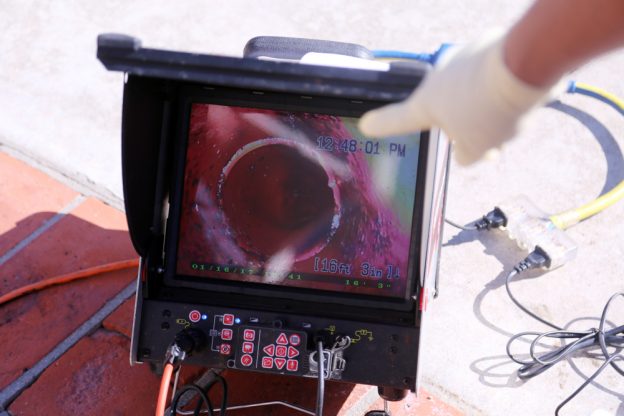
CCTV pipe inspection simply involves the use of highly advanced versatile and intelligent closed-circuit television systems deployed underground – in buried piping – to inspect the physical condition of drain pipes with the aim of identifying the type and location of any existing or developing damage or obstruction.

This highly advanced technology is associated with a variety of important benefits as listed below.

Effective

When it comes to unearthing any issues hidden within your home’s drainage pipes, nothing beats the effectiveness of CCTV camera inspections.

With this technology, any and all imperfections and damage within the structure of the drain pipe can be located and inspected visually with ease.

The cameras that are used send a crystal clear image of the damage or objects causing the blockage making it easier for contractors and plumbing experts to identify the most suitable solutions.

Accurate

In addition to effectively identifying the problem, you are facing with your drains, CCTV camera inspections are also very accurate.

The technology used not only accurately identifies the nature of the problem at hand, whether it is a tree root that has broken through your drain pipes or an accumulation of toiletries or any other debris causing a blockage, and its specific location along the drain pipe.

This level of accuracy eliminates the need for any trial and error when it comes to fixing the problem at hand.

Non-Invasive

As previously mentioned, CCTV camera drain inspections rely on the use of cameras to inspect the condition of drainage systems.

To visually inspect your home’s drainage system, there is no need to dig up buried drain pipes with this type of solution.

This not only saves homeowners and potential property buyers a lot of problems – associated with excavation activities – but also helps maintain the environment in its current state.

Efficient

Using CCTV cameras to inspect buried drain pipes is both time and cost-efficient.

Problematic drainage pipes can wreak havoc in your home by interrupting the proper drainage of wastewater from your property.

To fix the problem at hand, and with it get your life back on track, it is important that you find a swift solution.

CCTV camera drain inspections help identify the problem that is causing you headaches easily and fast without the need for time-consuming excavation activities.

Furthermore, by eliminating the need to dig through your property in search of the problem, this solution helps homeowners save a lot of money as well.

Conclusion

Your home’s drainage system plays an important role in directing wastewater away from the house.

Broken, damaged or blocked drainage pipes can cause a lot of damage in and around your home, in addition to interrupting your normal everyday routine.

However, identifying the problem areas and fixing them tends to be quite challenging given the fact that drain pipes are often buried underground, beneath layers of soil or concrete or both.

If you are looking for a trustworthy and reliable plumbing service in Melbourne, then look no further than Austest Pipeline Solutions.

We have more than 20 years’ experience in domestic, commercial, and industrial plumbing with water leak detection our speciality.

With the use of our CCTV drain pipe inspection service, we offer a highly accurate, effective and non-invasive way of inspecting buried drain pipes, uncovering any damage swiftly before recommending the best solutions.

Please call us today for all your plumbing needs on 0410 609 961 or contact us here.

Effective Pipe Inspection Methods
13
Dec
2019

Do you have a pipe leak in your home? Is it difficult to diagnose the exact location from where the leak is coming from?

If so, please continue reading for more information.

The latest technologically advanced pipe inspection methods will let you find the exact location of the pipe leak and immediately fix it.

Keeping your plumbing pipes in good condition isn’t always easy because of the inherent difficulty in diagnosing the location of leaks and cracks.

When there is a leak, it’s difficult to tell the exact location of the leak by just looking at the pipe system.

You may need to dig up the pipes to find the actual leak or crack – which isn’t an easy task for an inexperienced homeowner.

Most homeowners don’t realise the extent of the damage to their pipes until the problem has begun to spread to the surrounding areas.

That’s why you need to schedule a pipeline inspection every year. You should always rely on a water leak detection specialist in your local area for such an inspection.

This article provides information on some of the most popular and trusted pipe inspection methods used today.

  • Pushcam
  • Solo Cam
  • Lateral Launch Cam
  • Sonde Location

Pushcam

A push cam is a camera at the end of a long cord. This cord will be inserted into the pipeline manually by the plumbing specialist.

This is one of the simplest forms of video pipe inspections out there. The camera will record a live feed of the inside of the pipe.

The live feed will be transmitted back to the plumbing specialist who is searching. The push cam will be retrieved manually by the plumbing specialist once the inspection is over.

However, the push cam method can become difficult to manoeuvre in certain parts of the piping system.

Solo Cam

Solo cams are remote-controlled units that are free to move back and forth within the piping system. They are completely independent and not attached to a cord similar to the push cam method.

However, this method cannot be used to detect deep issues in the pipe system because it’s not as far-reaching as the push cam method.

The solo cam method is growing in popularity because plumbers are realising the importance of a more autonomous camera system.

Lateral Launch Cam

The lateral launch cam is used to inspect piping systems besides the mainline. This is a robot with a secondary camera on it. The robot will move down the mainline and reach the brach line of the pipe.

At this point, the unit will send a secondary camera to inspect the problem with the pipe.

This is one of the best methods of getting a complete understanding of the piping system that serves your home or commercial establishment.

No problem will go unnoticed when you use this method correctly to diagnose piping issues in your home.

Sonde Location

This is a battery-powered pod attached to a cord that’s small enough to fit in the palm of your hand.

When the sonde is inserted into the problematic piping system, it will give off an electromagnetic field while operating.

There is a separate device above the ground to monitor this electromagnetic field. This will be used to trace the path of the pipe. Clogs and leaks can be easily diagnosed with this type of device.

If you are looking for a trustworthy and reliable plumbing service in Melbourne, then look no further than Austest Pipeline Solutions.

We have more than 20 years’ experience in domestic, commercial, and industrial plumbing with water leak detection our speciality.

Please call us today for all your plumbing needs on 0410 609 961 or contact us here.

Detect Leak In Pool Liner
06
Dec
2019

Inground pools naturally lose water due to evaporation, but an excessive drop in the water level may be indicative of a leak.

Unfortunately, every swimming pool will probably start leaking at some time during their useful life and a small hole the size of a pencil tip can result in the loss of hundreds of litres of water per day.

Small leaks in swimming pools develop slowly over time and an unrepaired leak can be more than just an inconvenience.

In addition to the increased cost of replacing the water and increased chemical demands, it may lead to more serious mechanical and structural problems that will cost a fortune to repair.

Loss of more than ½ to 1 inches of water in a day will require investigation as to the cause and swift action will need to be taken to repair the damage.

The following outlines the process for leak detection in your swimming pool.

Confirming there is a Leak

This can easily be done by marking the water level in the pool with a strip of painter’s tape. Fill a 5-gallon bucket with water and mark the level with the painter’s tape.

After 24 hours, measure the difference in water level between the pool and the bucket. If the water loss in the pool is significantly greater than that in the bucket, the pool has a leak.

Before deciding to repair a leak, however, the location and severity of the leak must first be identified.

When done systematically, the endeavour of finding a leak follows a procedure that progresses from a clear indication of water loss to the exact location of the leak.

While leak detection experts have the professional equipment and expertise to perform this process in a few hours or less, diligent pool owners may be able to detect a leak by following a few simple steps.

Eliminate Other Causes

Check for leaks in the filtration and electrical systems by looking for moisture on the conduit lines that come from the pool’s lights and check the plumbing systems for signs of leakage.

If there is water or moisture present on wires or pipes, call a professional to repair the leak.

Other symptoms of a leak may be actual evidence of escaped water such as wet, mushy spots on the lawn or unusually vigorous growth of vegetation around underground plumbing areas.

Visible cracks or settling on the deck or pool surrounds may also indicate underground leaks.

How to Detect a Leak in the Pool Liner

If there are no signs of a leak in the electrical or filtration systems, it is most likely that there is a hole in the liner of the pool.

There is a simple method to detect the location of a leak in the pool liner by simply using food colouring or dye.

Dye testing will require complete inspection by donning a dive mask and inspecting the liner for leaks.

– Fill the pool to ensure that the leak is not above the water level.

– Investigate the walls around the pool for signs of squishiness that indicates a leak. Wherever there is a suspected leak, place a drop of dye within 5mm of the suspected area.

– Feel around the bottom of the pool for squishy areas and apply more dye.

The coloured dye will allow you to observe the flow of water. As soon as the dye is placed near a leak it will flow out at the exact spot where the leak is.

Once the location of the leak has been detected it will be easy to determine how it should be fixed.

Ideally, the leak should be professionally repaired but in some cases, a very small hole can be fixed with a DIY patch. If the hole is too big you may need a replacement liner.

If a leak in the vinyl liner of a pool is not repaired as quickly as possible it will not only result in increased water bills but will also weaken the subsoil and cause structural damage.

If you are looking for a trustworthy and reliable plumbing service in Melbourne, then look no further than Austest Pipeline Solutions.

We have more than 20 years’ experience in domestic, commercial, and industrial plumbing with water leak detection our speciality.

Please call us today for all your plumbing needs on 0410 609 961 or contact us here.
Trenchless Pipe Lining Technology
26
Nov
2019

Imagine being able to repair leaks in underground pipes without the need to dig a trench? Well, the good news is that it can be done. Please read below for more.

Trenchless pipe lining is part of the broader trenchless technology.

In a nutshell, trenchless pipe lining is a type of subsurface construction and civil engineering technology that uses little to no continuous trenching in the installation of new and repairing and replacement of existing underground pipes, thereby reducing disturbance and the overall cost.

To understand this relatively new but increasingly popular technology, you need to delve into the following:

  • How trenchless pipe lining works (the steps),
  • It’s application,
  • The benefits of trenchless pipe lining, and
  • The reliability of the resulting pipe

How Trenchless Pipe Lining Technology Works

The trenchless pipe lining process consists of three phases.

The first phase is the preparation phase whereby the pipeline in question is removed from service, with a diversion or tanking feature installed in the meantime.

After that, the pipe that needs repair is thoroughly cleaned, typically using a combination of high-pressure jets and manual cleaning to get rid of debris and corrosion.

This ensures the lining will fit as close to the original pipe as possible, ensuring the lining pipe has ample capacity.

The specialists may also remove defective parts of the original pipe, especially when the pipe diameter has been negatively impacted.

The second phase is the lining process. During this phase, the Cured In Place Pipe Lining, saturated with resin, is winched or pulled in and installed in place.

The liner is inflated using compressed air or water under high-pressure.

Once in place, the liner is cured using hot water, steam, ultraviolet light, and in some rare cases, the liner is cured using ambient temperature.

The final phase is the post-curing stage. This stage comes after the liner has cooled and hardened in place. The end cuts are cut off and removed, leaving the pipe end flush and ready for sealing, if required.

The water used to cure the pipes is removed and disposed of safely. The final bit is to inspect and test the new pipe to ensure it meets the pre-determined specs.

The Application Of Trenchless Pipe Lining

Trenchless pipe lining is used to repair leaking, broken, and rusted pipes that are installed underground.

As such, the technology is used to repair pipes that are part of the sewer system, residential sewer plumb lines, and commercial sewer plumb lines.

The Benefits Of Trenchless Pipe Lining

Trenchless pipe lining technology yields a lot of benefits for everyone involved. For instance, homeowners get access to less expensive pipe repair and replacement services.

Pipelining costs as much as 50% to 70 % cheaper when compared to the excavation process.

Homeowners also do not have to incur the hassle and the costs associated with excavating concrete installations such as walls and floors.

Trenchless pipe lining is also a clean pipe repair process as specialists do not have to excavate the leaking pipe.

It is also a faster way of repairing and replacing leaking old pipes – after all, there is no trenching needed.

Given that it is a fast and safe solution, property owners or occupants need not move out for the pipe renovations to take place.

On the other hand, other people in the vicinity of the project benefit from an environmentally friendly process of repairing plumbing lines.

They do not have to worry about grey and black water leaks affecting their environment.

Trenchless pipe lining technology allows service providers to render cost-efficient services. They can, therefore, attract more clients and retain most of the clients they get.

The Reliability Of Installed Pipes

Depending on the environment, the pipe lining can last as long as 50 years. After the inner lining cures, the resulting pipe is solid.

In fact, the pipe can stand alone and function as a pipe without suffering from structural integrity deficiencies.

Moreover, the lined pipe can withstand load bearing from the soil covering it, foot traffic, and even vehicles.

Conclusion

Trenchless pipe lining technology has revolutionised how underground pipe installations are maintained, repaired, and replaced.

The technology reduces the amount of time it takes to repair underground installation while yielding high-quality pipes that last long and are fit for purpose.

If you are looking for a trustworthy and reliable plumbing service in Melbourne, then look no further than Austest Pipeline Solutions.

We have more than 20 years’ experience in domestic, commercial, and industrial plumbing with water leak detection our speciality.

Please call us today for all your plumbing needs on 0410 609 961 or contact us here.

CCTV Camera Drain Inspections For Drains
19
Nov
2019

Are your sinks or drains blocked up? Do your toilet and sinks emit a foul stench that seemingly does not seem to go away? You might need a CCTV inspection for your drainage system. In this article, we explore the benefits of drain inspections for your drains and how they can pinpoint the cause of your clogged plumbing system.

CCTV drain inspections and surveys are a means through which professional plumbers can inspect the health and state of a drainage system. This non-intrusive inspection method is invaluable for drainage system repairs, maintenance, extensions, and upgrades.

Using the latest technology in drainage inspections, experienced technicians can identify blockages, rusting, damages and other issues in the drainage lines.

This method of drain inspection is the standard inspection method in today’s plumbing industry. It allows plumbers and leak technicians to glimpse inside the property owner’s drainage system in a fast, cheap, and convenient manner.

To understand the intricacies of CCTV drainage inspection, we will look at:

  • How drainage inspections and surveys are done
  • Why you might need a CCTV drainage inspection and survey
  • What insight can a CCTV drain inspection reveal

How Drain Inspections Are Done

As the name suggests, the CCTV camera survey involves using a camera and monitor to inspect and survey the drainage system. As such, every CCTV drainage survey and inspection begins with having the right tools. When you contract professional plumbers, they should come with all the tools required for the job.

These will include waterproof cameras that can function even when submerged in black and grey water that flows in the drainage system. They will also need crawlers, which are remote-operated and controlled mobility vehicles that increase the mobility and access of the camera to all parts of the drainage system.

Other tools the technician might come with may include access rods, crawlers, monitors, and sonar units. While sonar systems do not give a live video feed, they are useful in getting an insight into the state of the pipe where getting a live video feed is impossible to get.

With these tools in hand, the technician will develop an action plan for efficient drainage surveying. The plan will enable them to inspect and survey the entire drainage system in a fast and efficient manner, while also being thorough.

Then using the best tool available, they will probe the whole drainage system, getting a live feed of the state and health of the plumbing system. At the end of the process, the technician will write up a report on their findings and provide recommendations to the property owner.

What Insights Can A CCTV Drainage Inspection Reveal

A CCTV survey will obviously reveal the extent, location, and state of all the drains. This is critical when planning for building projects such as house extensions and renovations. However, the information generated from the survey is also helpful for people looking to purchase a property.

The survey will reveal the extent state and health of the drainage system and whether repairs and replacements are needed.

As for CCTV camera inspection for maintenance and repair purposes, the examination will reveal instances of blockages, tree root ingress, pipe damage, leaks, collapsed drains, animal intrusion, wear, tear, corrosion, and drainage displacement.

Why You Might Need A CCTV Drainage Inspection And Survey

Generally speaking, property owners should seek CCTV camera inspection whenever they need to get insights into the state of their drainage system.

However, these services are frequently sought after by individuals who are facing surface flooding, drainage issues, subsidence, or property owners building new houses or extensions.

Conclusion

CCTV camera inspections are a cost-effective and non-intrusive means of determining the exact state of a drainage pipe.

In the hand of professional drainage inspectors, the survey and inspection will help you understand what is the main drain problem in your home and what is the cause. From here, the technician will be able to provide a full detailed report for your plumber to repair.

If you have any questions or want to learn how Austest Pipeline Solutions can help your blocked drains, get in touch or send an online enquiry today. For over three decades, we have been providing specialised services across Melbourne including CCTV drain inspections, leak detection, smoke testing, and much more. Get in touch with us today to prevent further damage to your property.

Technology Detect Drain Leaks
12
Nov
2019

Do you know how easy technology has made it to detect water leaks nowadays? What used to take a long time to locate can now be found a lot more quickly. Find out why and what technology we have today to detect leaks around your property.

A leaking drain pipe can cause a lot of problems; poor water pressure, rising water bills, and potential damp problems that will damage your property, which are all potential hazards from a water leak.

Finding Leaks and Fixing Them

The problem with leaks is figuring out where they are and how to fix them. If it isn’t obvious where a leak is coming from, you may not even know that you have one until you get a water bill that is much higher than normal.

Leaks in your home are the easiest to detect as you might be able to hear the hiss of water or smell a musty odour that suggests you have a small leak in a pipe between your walls. The big problems come when the leaks are in hard-to-detect places.

How Technology is Used in Leak Detection

If one of your underground pipes is leaking then finding the leak can be much harder.

Firstly, the leak detection specialist will have to determine whether there is actually a leak. This is done using a pressure test. The plumber will shut off the supply and measure the pressure at one end of the pipe.

Modern equipment is more sensitive than the pressure measurements that the average meter can give so this will tell you with more certainty whether you actually have a leak or not.

However, it won’t actually tell you where the leak is. For that, there are several options, including:

  • Acoustic leak detection
  • Pipe tracing with RF transmitters
  • Thermal imaging
  • Slab leak detection
  • Video inspections

Most modern leak detection methods work using similar principles. They rely on using sight or sound or acoustic detection to detect leaks. A skilled plumber may be able to find a large leak just by using their ears alone and tapping the pipes in various places.

Digital leak detection uses similar methods but with much more sensitive computer technology doing the detection work. RF transmitters can help to detect leaks in metal pipes, while thermal imaging and video inspections can help with plastic pipes or smaller pipes.

One of the latest technologies which are being used by major water boards is a ‘smartball’, which is a bowling ball-shaped device with an acoustic sensor in it.

The bowling ball is pushed through the pipe by the water pressure and records its readings as it goes. It can take up to 12 hours for the ball to travel through the pipe but this is a good way to get precise readings from hard to reach piping.

Running a cable through the pipe with a small camera is another option for detecting leaks in difficult-to-reach areas.

Get Leak Diagnostics For Your Home

If you think that you have a leak in your property it is important that you get it fixed as soon as possible. If you are looking for a trustworthy and reliable leak detecting service in Melbourne, then look no further than Austest Pipeline Solutions.

We offer high tech leak detection services for both homeowners and commercial properties. Our services could save you thousands of dollars by helping you to detect a difficult leak before it does further damage to your home.

We can locate and fix leaks in a timely manner, preventing damage to your home. We can find faults that other plumbers have missed using our camera inspection services. Send us an online enquiry or get in touch today by calling 1800 532 533 before the damage costs add up.

How Detect Roof Leak
05
Nov
2019

Do you have a leak in your roof but aren’t exactly sure where it is coming from? If you suspect your roof is leaking or can see discolouration on your ceiling, then continue reading to learn how to detect the source of the leak.

Roof leaks can be caused by a number of things including gaps in the metal flashing around vent pipes and chimneys, missing shingles, or even small holes in the roof. The source of a leak is usually not obvious on the actual roof and can be hard to isolate because the water may run down the rafters and roof decking before it drips onto the ceiling below.

Here are the general steps that a professional roof leak detector will follow when it comes to detecting roof leaks:

Step 1: Visual Inspection

The sight and sound of dripping water are usually the first signs of a roof leak. However, there are other signs to also check for, such as:

  • Warped or missing shingles
  • Bulging patches on the interior walls
  • Spots on the exterior walls
  • Water stains on the ceiling
  • Musty odours in some rooms

All these signs could be indicative of a potential leak somewhere in the roof. The first place that you notice the leak might not necessarily indicate the exact location of the leak. For that, some further investigation will be required. Sometimes a visual inspection isn’t complete without checking the attic. This means that the technician will need to climb up into the attic to check for the roof leak. Once in the attic, they will look for water stains, mould, or black marks along the roof sheathing and rafters.

If you don’t have an attic, then they will need to check the roof for any signs of damage as described in step 1 above and move straight to step 2 as described below.

Step 2: Water Test

If the technician is unable to isolate the source of the leak with a visual inspection, they will then perform a water test. To do this they will need someone else to assist them. Someone will need to stay inside the house close to the spot where you first noticed the leak.

The technician will need to go up the roof with a garden hose and wet the roof one section at a time. The person inside the house will shout out once they see any water dripping. This can be a lengthy process as they will need to spend several minutes in each area.

However, it is an important step as it helps to narrow down the area where the leak most likely originates from. If the person inside the house sees the water dripping, but cannot find the exact spot where it is coming from, then the shingles or roof tiles may need to be removed in the suspected area to try and narrow down the source of the leak.

Step 3: Repairs

Depending on the location of the leak, there are several potential fixes that can be used. This is where you will need to call in the experts as they will have all the necessary tools and knowledge to fix the problem.

Some of these repairs may include the following:

Replacing Damaged Shingles or Roof tiles: If damaged shingles or tiles are the source of the leak, they may need to be removed and replaced with new shingles or roof tiles.

Reapplying Caulk Along Window Edges, Vents, and Chimneys: If there is a leak around any of these areas, the caulk will need to be replaced around the flashing.

Fixing the Roof Penetration Flashing: Damaged roof vent flashing can let water in where it shouldn’t be. If the existing flashing is in good shape, it might just be a matter of simply replacing the screws with better ones. If not, new flashing will need to be installed.

Get your roof plumbing inspected

Identifying the source of a roof leak can be very difficult to do on your own. If you suspect that you have a leak in your roof, then it really is best to call in the professionals. They will identify the extent of the leak and recommend a suitable solution in the form of roof repair or replacement.

If you’re having difficulties finding the source of your roof leak, then call Austest Pipeline Solutions or send an online enquiry today. Our leak detection experts can detect any leak coming from your roof and advise you of the next steps to take in getting it fixed.

Tree Root Killer To Fix Clogging Sewer Pipes
26
Oct
2019

Do you have trouble with tree roots growing in your sewer pipes? This is a very common problem that most people face, so let’s take a look now at what you can do if you’re experiencing this common blockage.

Trees not only beautify our surroundings, but they also serve as windbreakers and provide shade. On the other hand, trees and specifically their roots can wreak havoc within your plumbing system by clogging up your sewer line and causing your blocked drains to clog increasing further damage underground.

You might think that all the wastewater that evacuates from your home via the sewer line is toxic to plants. When faced with such a situation, many property owners will settle on DIY methods of removing the roots and unclogging the sewer line.

If you find yourself with a tree root clogged sewer line, you might ask yourself whether tree root killer is the answer for roots in sewer pipes.

How Tree Roots Find Their Way Into Sewer Line

The truth of the matter is, trees thrive on sewer water. The water is rich in the dissolved biological matter, which acts as nutrients.

And since the water swirls a lot as it moves in the sewer line, it well oxygenated. Moreover, the sewer effluent has plenty of water.

In a sense, the sewer water has everything the tree needs to thrive. As such, at any opportunity, tree roots will grow through any leaking spaces in the sewer line and clog it.

When the sewer line has a crack or the joints are leaking, the water that escapes the sewer line wet the soil. This will also attract tree roots, which traverses the ground up to moisten the soil. Eventually, the tree roots find their way into the sewer line through the cracks.

The tree roots continue to grow until they form a mesh-like structure that is better capable of trapping moisture and nutrients. At this point, they clog your sewer line entirely. This is when you will begin to notice that water does not flow efficiently down the drains. Left unchecked, the root structure will crack open the sewer line.

The Different Types Of Root Killers And How Each Type Works

Using Rock Salt – Salts in the form of rock salt, sodium chloride and copper sulphate are poisonous to tree roots. To use the salt, you need to pour about half a kilo of salt into a bucket of water and flush it down the toilet leading to the blocked line.

Repeat the process again to flush a total of about one kilo of salt down the drain. The next step is to avoid running water into the sewer line for 8 to 12 hours. During this time the salts will draw water from the tree roots and poison the roots until they die.

Roaming Root Killer – This type of product is a foaming substance that contains herbicide. The herbicide kills the root and prevents their regrowth.

The Effectiveness Of Root Killers

Root removal solutions are not the most effective solution as the roots will still grow after some time. It might take a couple of years, but if the cracks still exist, tree roots will find their way inside the pipe once again.

Additionally, when using root killers, you run the risk of killing the tree ultimately, which might create other hazards such as falling branches.

Contact us for help clearing your drains

Root killers are only a stop-gap solution to tree roots clogging your sewer line. Eventually, you need to unearth the sewer lines and repair the lines. You can only use root killer products for so long until you need to call on a water pipe leak service to repair or replace your sewer pipes.

If you suspect tree roots are growing in your drain pipes, give us a call or send through an online enquiry, we are ready to assist at Austest Pipeline Solutions. We provide a range of burst pipe detection services around Melbourne and surrounding areas.

What Is CCTV Drain Inspection and Reporting Used For
19
Oct
2019

What is CCTV Drain Inspection and what is it used for? Most people think CCTV is only used for video surveillance but don’t know it can also be used for drain plumbing purposes. Let’s find out more about this useful equipment.

When most people hear the word ‘CCTV’, the first thing that comes to mind is video surveillance which takes place in most commercial buildings, city streets and other public places.

Well, they are not wrong to think this as CCTV stands for Closed Circuit Television or in other words; video surveillance.

Now, you may be wondering, how does video surveillance relate to drain inspection?

Well, video surveillance is a technology that has a wide range of applications besides enhancing public safety and security.

Video surveillance is also used by leak detection plumbers to detect leaks and faults in drains and pipes.

What Is A CCTV Drain Inspection?

If you have ever been the victim of a blocked drain or pipe, you definitely know how stressful and frustrating it can be to fix this problem. Sometimes, your drain may keep getting blocked every now and then despite you taking the necessary measures to unblock it.

Blocked drains make the process of expelling wastewater from your home or business very tedious and sometimes impossible. If you are not quite sure why your drain keeps blocking every few weeks or months, a CCTV drain inspection may be the fix.

A CCTV drain inspection is a plumbing diagnosis technique that makes use of closed-circuit television systems to find blockages, leaks and other faults inside pipes, sewer lines and drains.

Why CCTV Drain Inspection?

There are many ways to diagnose a blocked or leaking drain. Drain diagnosis involves getting to know the root cause of the problem so that it can be properly addressed.

Traditional methods of drain diagnosis such as using wires and other materials require a lot of time and effort.

They are also not very effective meaning you may never get to know why your drains keep leaking or get blocked. However, with CCTV drain inspection, things get a little bit different and more sophisticated.

Drain diagnosis is done using state of the art video surveillance equipment. The tools and equipment used are tailor-made for this kind of job.

For instance, the cameras used to capture images and video are so tiny that they can fit in very narrow pipes and drains.

CCTV drain inspection enables plumbers to see the innermost parts of your drains and pipes, which would otherwise be impossible.

Recurring Leaks and Blockages

Recurring leaks and blockages are probably the most common issues that professional plumbers have to deal with. When a pipe in your building doesn’t stop leaking or getting clogged no matter what you do, you are left with very few options.

You can choose to carry out a CCTV drain inspection or survey to get to the root cause of the problem. Alternatively, you can choose to get rid of the affected drain and replace it with a new one.

The latter option is definitely more expensive and time-consuming than the former. It’s worth noting that recurring cases of drain leaks and blockages should not be taken for granted. Such problems are known to cause serious structural damage to buildings and other infrastructures if left unaddressed.

Benefits of CCTV Drain Inspection and Reporting

There are many benefits to choosing a CCTV inspection for blocked drains and how it can help you save time and money in the long run.

If you have a leaking or blocked drain or pipe in your home or business, it’s highly recommended that you get a CCTV drain inspection done so that you can rest assured that the problem is solved.

A successful drain inspection that gets to the root cause of your drain problems can give you enormous peace of mind. CCTV drain inspections can detect a wide range of problems ranging from broken/cracked pipes, blockage/clog build-ups, root damage and even animal infestations.

Schedule an inspection today

If you suspect your drain pipes have a blockage, or if you want to ensure there is no structural damage in your plumbing system, feel free to give us a call 1800 532 533 or send an enquiry online today.