Author Archives: developer

Trenchless Pipe Lining Technology
26
Nov
2019

Imagine being able to repair leaks in underground pipes without the need to dig a trench? Well, the good news is that it can be done. Please read below for more.

Trenchless pipe lining is part of the broader trenchless technology.

In a nutshell, trenchless pipe lining is a type of subsurface construction and civil engineering technology that uses little to no continuous trenching in the installation of new and repairing and replacement of existing underground pipes, thereby reducing disturbance and the overall cost.

To understand this relatively new but increasingly popular technology, you need to delve into the following:

  • How trenchless pipe lining works (the steps),
  • It’s application,
  • The benefits of trenchless pipe lining, and
  • The reliability of the resulting pipe

How Trenchless Pipe Lining Technology Works

The trenchless pipe lining process consists of three phases.

The first phase is the preparation phase whereby the pipeline in question is removed from service, with a diversion or tanking feature installed in the meantime.

After that, the pipe that needs repair is thoroughly cleaned, typically using a combination of high-pressure jets and manual cleaning to get rid of debris and corrosion.

This ensures the lining will fit as close to the original pipe as possible, ensuring the lining pipe has ample capacity.

The specialists may also remove defective parts of the original pipe, especially when the pipe diameter has been negatively impacted.

The second phase is the lining process. During this phase, the Cured In Place Pipe Lining, saturated with resin, is winched or pulled in and installed in place.

The liner is inflated using compressed air or water under high-pressure.

Once in place, the liner is cured using hot water, steam, ultraviolet light, and in some rare cases, the liner is cured using ambient temperature.

The final phase is the post-curing stage. This stage comes after the liner has cooled and hardened in place. The end cuts are cut off and removed, leaving the pipe end flush and ready for sealing, if required.

The water used to cure the pipes is removed and disposed of safely. The final bit is to inspect and test the new pipe to ensure it meets the pre-determined specs.

The Application Of Trenchless Pipe Lining

Trenchless pipe lining is used to repair leaking, broken, and rusted pipes that are installed underground.

As such, the technology is used to repair pipes that are part of the sewer system, residential sewer plumb lines, and commercial sewer plumb lines.

The Benefits Of Trenchless Pipe Lining

Trenchless pipe lining technology yields a lot of benefits for everyone involved. For instance, homeowners get access to less expensive pipe repair and replacement services.

Pipelining costs as much as 50% to 70 % cheaper when compared to the excavation process.

Homeowners also do not have to incur the hassle and the costs associated with excavating concrete installations such as walls and floors.

Trenchless pipe lining is also a clean pipe repair process as specialists do not have to excavate the leaking pipe.

It is also a faster way of repairing and replacing leaking old pipes – after all, there is no trenching needed.

Given that it is a fast and safe solution, property owners or occupants need not move out for the pipe renovations to take place.

On the other hand, other people in the vicinity of the project benefit from an environmentally friendly process of repairing plumbing lines.

They do not have to worry about grey and black water leaks affecting their environment.

Trenchless pipe lining technology allows service providers to render cost-efficient services. They can, therefore, attract more clients and retain most of the clients they get.

The Reliability Of Installed Pipes

Depending on the environment, the pipe lining can last as long as 50 years. After the inner lining cures, the resulting pipe is solid.

In fact, the pipe can stand alone and function as a pipe without suffering from structural integrity deficiencies.

Moreover, the lined pipe can withstand load bearing from the soil covering it, foot traffic, and even vehicles.

Conclusion

Trenchless pipe lining technology has revolutionised how underground pipe installations are maintained, repaired, and replaced.

The technology reduces the amount of time it takes to repair underground installation while yielding high-quality pipes that last long and are fit for purpose.

If you are looking for a trustworthy and reliable plumbing service in Melbourne, then look no further than Austest Pipeline Solutions.

We have more than 20 years’ experience in domestic, commercial, and industrial plumbing with water leak detection our speciality.

Please call us today for all your plumbing needs on 0410 609 961 or contact us here.
CCTV Camera Drain Inspections For Drains
19
Nov
2019

Are your sinks or drains blocked up? Do your toilet and sinks emit a foul stench that seemingly does not seem to go away? You might need a CCTV inspection for your drainage system. In this article, we explore the benefits of drain inspections for your drains and how they can pinpoint the cause of your clogged plumbing system.

CCTV drain inspections and surveys are a means through which professional plumbers can inspect the health and state of a drainage system. This non-intrusive inspection method is invaluable for drainage system repairs, maintenance, extensions, and upgrades.

Using the latest technology in drainage inspections, experienced technicians can identify blockages, rusting, damages and other issues in the drainage lines.

This method of drain inspection is the standard inspection method in today’s plumbing industry. It allows plumbers and leak technicians to glimpse inside the property owner’s drainage system in a fast, cheap, and convenient manner.

To understand the intricacies of CCTV drainage inspection, we will look at:

  • How drainage inspections and surveys are done
  • Why you might need a CCTV drainage inspection and survey
  • What insight can a CCTV drain inspection reveal

How Drain Inspections Are Done

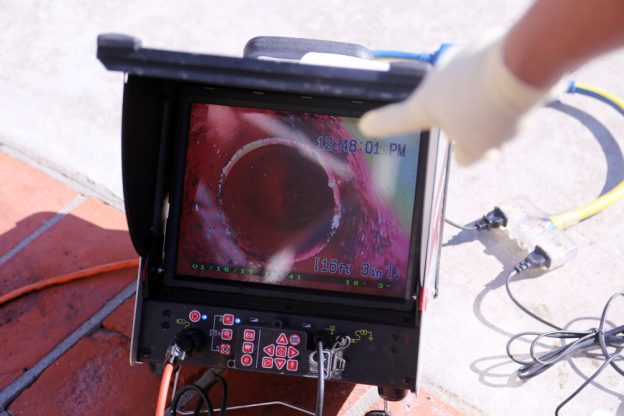
As the name suggests, the CCTV camera survey involves using a camera and monitor to inspect and survey the drainage system. As such, every CCTV drainage survey and inspection begins with having the right tools. When you contract professional plumbers, they should come with all the tools required for the job.

These will include waterproof cameras that can function even when submerged in black and grey water that flows in the drainage system. They will also need crawlers, which are remote-operated and controlled mobility vehicles that increase the mobility and access of the camera to all parts of the drainage system.

Other tools the technician might come with may include access rods, crawlers, monitors, and sonar units. While sonar systems do not give a live video feed, they are useful in getting an insight into the state of the pipe where getting a live video feed is impossible to get.

With these tools in hand, the technician will develop an action plan for efficient drainage surveying. The plan will enable them to inspect and survey the entire drainage system in a fast and efficient manner, while also being thorough.

Then using the best tool available, they will probe the whole drainage system, getting a live feed of the state and health of the plumbing system. At the end of the process, the technician will write up a report on their findings and provide recommendations to the property owner.

What Insights Can A CCTV Drainage Inspection Reveal

A CCTV survey will obviously reveal the extent, location, and state of all the drains. This is critical when planning for building projects such as house extensions and renovations. However, the information generated from the survey is also helpful for people looking to purchase a property.

The survey will reveal the extent state and health of the drainage system and whether repairs and replacements are needed.

As for CCTV camera inspection for maintenance and repair purposes, the examination will reveal instances of blockages, tree root ingress, pipe damage, leaks, collapsed drains, animal intrusion, wear, tear, corrosion, and drainage displacement.

Why You Might Need A CCTV Drainage Inspection And Survey

Generally speaking, property owners should seek CCTV camera inspection whenever they need to get insights into the state of their drainage system.

However, these services are frequently sought after by individuals who are facing surface flooding, drainage issues, subsidence, or property owners building new houses or extensions.

Conclusion

CCTV camera inspections are a cost-effective and non-intrusive means of determining the exact state of a drainage pipe.

In the hand of professional drainage inspectors, the survey and inspection will help you understand what is the main drain problem in your home and what is the cause. From here, the technician will be able to provide a full detailed report for your plumber to repair.

If you have any questions or want to learn how Austest Pipeline Solutions can help your blocked drains, get in touch or send an online enquiry today. For over three decades, we have been providing specialised services across Melbourne including CCTV drain inspections, leak detection, smoke testing, and much more. Get in touch with us today to prevent further damage to your property.

Technology Detect Drain Leaks
12
Nov
2019

Do you know how easy technology has made it to detect water leaks nowadays? What used to take a long time to locate can now be found a lot more quickly. Find out why and what technology we have today to detect leaks around your property.

A leaking drain pipe can cause a lot of problems; poor water pressure, rising water bills, and potential damp problems that will damage your property, which are all potential hazards from a water leak.

Finding Leaks and Fixing Them

The problem with leaks is figuring out where they are and how to fix them. If it isn’t obvious where a leak is coming from, you may not even know that you have one until you get a water bill that is much higher than normal.

Leaks in your home are the easiest to detect as you might be able to hear the hiss of water or smell a musty odour that suggests you have a small leak in a pipe between your walls. The big problems come when the leaks are in hard-to-detect places.

How Technology is Used in Leak Detection

If one of your underground pipes is leaking then finding the leak can be much harder.

Firstly, the leak detection specialist will have to determine whether there is actually a leak. This is done using a pressure test. The plumber will shut off the supply and measure the pressure at one end of the pipe.

Modern equipment is more sensitive than the pressure measurements that the average meter can give so this will tell you with more certainty whether you actually have a leak or not.

However, it won’t actually tell you where the leak is. For that, there are several options, including:

  • Acoustic leak detection
  • Pipe tracing with RF transmitters
  • Thermal imaging
  • Slab leak detection
  • Video inspections

Most modern leak detection methods work using similar principles. They rely on using sight or sound or acoustic detection to detect leaks. A skilled plumber may be able to find a large leak just by using their ears alone and tapping the pipes in various places.

Digital leak detection uses similar methods but with much more sensitive computer technology doing the detection work. RF transmitters can help to detect leaks in metal pipes, while thermal imaging and video inspections can help with plastic pipes or smaller pipes.

One of the latest technologies which are being used by major water boards is a ‘smartball’, which is a bowling ball-shaped device with an acoustic sensor in it.

The bowling ball is pushed through the pipe by the water pressure and records its readings as it goes. It can take up to 12 hours for the ball to travel through the pipe but this is a good way to get precise readings from hard to reach piping.

Running a cable through the pipe with a small camera is another option for detecting leaks in difficult-to-reach areas.

Get Leak Diagnostics For Your Home

If you think that you have a leak in your property it is important that you get it fixed as soon as possible. If you are looking for a trustworthy and reliable leak detecting service in Melbourne, then look no further than Austest Pipeline Solutions.

We offer high tech leak detection services for both homeowners and commercial properties. Our services could save you thousands of dollars by helping you to detect a difficult leak before it does further damage to your home.

We can locate and fix leaks in a timely manner, preventing damage to your home. We can find faults that other plumbers have missed using our camera inspection services. Send us an online enquiry or get in touch today by calling 1800 532 533 before the damage costs add up.

How Detect Roof Leak
05
Nov
2019

Do you have a leak in your roof but aren’t exactly sure where it is coming from? If you suspect your roof is leaking or can see discolouration on your ceiling, then continue reading to learn how to detect the source of the leak.

Roof leaks can be caused by a number of things including gaps in the metal flashing around vent pipes and chimneys, missing shingles, or even small holes in the roof. The source of a leak is usually not obvious on the actual roof and can be hard to isolate because the water may run down the rafters and roof decking before it drips onto the ceiling below.

Here are the general steps that a professional roof leak detector will follow when it comes to detecting roof leaks:

Step 1: Visual Inspection

The sight and sound of dripping water are usually the first signs of a roof leak. However, there are other signs to also check for, such as:

  • Warped or missing shingles
  • Bulging patches on the interior walls
  • Spots on the exterior walls
  • Water stains on the ceiling
  • Musty odours in some rooms

All these signs could be indicative of a potential leak somewhere in the roof. The first place that you notice the leak might not necessarily indicate the exact location of the leak. For that, some further investigation will be required. Sometimes a visual inspection isn’t complete without checking the attic. This means that the technician will need to climb up into the attic to check for the roof leak. Once in the attic, they will look for water stains, mould, or black marks along the roof sheathing and rafters.

If you don’t have an attic, then they will need to check the roof for any signs of damage as described in step 1 above and move straight to step 2 as described below.

Step 2: Water Test

If the technician is unable to isolate the source of the leak with a visual inspection, they will then perform a water test. To do this they will need someone else to assist them. Someone will need to stay inside the house close to the spot where you first noticed the leak.

The technician will need to go up the roof with a garden hose and wet the roof one section at a time. The person inside the house will shout out once they see any water dripping. This can be a lengthy process as they will need to spend several minutes in each area.

However, it is an important step as it helps to narrow down the area where the leak most likely originates from. If the person inside the house sees the water dripping, but cannot find the exact spot where it is coming from, then the shingles or roof tiles may need to be removed in the suspected area to try and narrow down the source of the leak.

Step 3: Repairs

Depending on the location of the leak, there are several potential fixes that can be used. This is where you will need to call in the experts as they will have all the necessary tools and knowledge to fix the problem.

Some of these repairs may include the following:

Replacing Damaged Shingles or Roof tiles: If damaged shingles or tiles are the source of the leak, they may need to be removed and replaced with new shingles or roof tiles.

Reapplying Caulk Along Window Edges, Vents, and Chimneys: If there is a leak around any of these areas, the caulk will need to be replaced around the flashing.

Fixing the Roof Penetration Flashing: Damaged roof vent flashing can let water in where it shouldn’t be. If the existing flashing is in good shape, it might just be a matter of simply replacing the screws with better ones. If not, new flashing will need to be installed.

Get your roof plumbing inspected

Identifying the source of a roof leak can be very difficult to do on your own. If you suspect that you have a leak in your roof, then it really is best to call in the professionals. They will identify the extent of the leak and recommend a suitable solution in the form of roof repair or replacement.

If you’re having difficulties finding the source of your roof leak, then call Austest Pipeline Solutions or send an online enquiry today. Our leak detection experts can detect any leak coming from your roof and advise you of the next steps to take in getting it fixed.

Tree Root Killer To Fix Clogging Sewer Pipes
26
Oct
2019

Do you have trouble with tree roots growing in your sewer pipes? This is a very common problem that most people face, so let’s take a look now at what you can do if you’re experiencing this common blockage.

Trees not only beautify our surroundings, but they also serve as windbreakers and provide shade. On the other hand, trees and specifically their roots can wreak havoc within your plumbing system by clogging up your sewer line and causing your blocked drains to clog increasing further damage underground.

You might think that all the wastewater that evacuates from your home via the sewer line is toxic to plants. When faced with such a situation, many property owners will settle on DIY methods of removing the roots and unclogging the sewer line.

If you find yourself with a tree root clogged sewer line, you might ask yourself whether tree root killer is the answer for roots in sewer pipes.

How Tree Roots Find Their Way Into Sewer Line

The truth of the matter is, trees thrive on sewer water. The water is rich in the dissolved biological matter, which acts as nutrients.

And since the water swirls a lot as it moves in the sewer line, it well oxygenated. Moreover, the sewer effluent has plenty of water.

In a sense, the sewer water has everything the tree needs to thrive. As such, at any opportunity, tree roots will grow through any leaking spaces in the sewer line and clog it.

When the sewer line has a crack or the joints are leaking, the water that escapes the sewer line wet the soil. This will also attract tree roots, which traverses the ground up to moisten the soil. Eventually, the tree roots find their way into the sewer line through the cracks.

The tree roots continue to grow until they form a mesh-like structure that is better capable of trapping moisture and nutrients. At this point, they clog your sewer line entirely. This is when you will begin to notice that water does not flow efficiently down the drains. Left unchecked, the root structure will crack open the sewer line.

The Different Types Of Root Killers And How Each Type Works

Using Rock Salt – Salts in the form of rock salt, sodium chloride and copper sulphate are poisonous to tree roots. To use the salt, you need to pour about half a kilo of salt into a bucket of water and flush it down the toilet leading to the blocked line.

Repeat the process again to flush a total of about one kilo of salt down the drain. The next step is to avoid running water into the sewer line for 8 to 12 hours. During this time the salts will draw water from the tree roots and poison the roots until they die.

Roaming Root Killer – This type of product is a foaming substance that contains herbicide. The herbicide kills the root and prevents their regrowth.

The Effectiveness Of Root Killers

Root removal solutions are not the most effective solution as the roots will still grow after some time. It might take a couple of years, but if the cracks still exist, tree roots will find their way inside the pipe once again.

Additionally, when using root killers, you run the risk of killing the tree ultimately, which might create other hazards such as falling branches.

Contact us for help clearing your drains

Root killers are only a stop-gap solution to tree roots clogging your sewer line. Eventually, you need to unearth the sewer lines and repair the lines. You can only use root killer products for so long until you need to call on a water pipe leak service to repair or replace your sewer pipes.

If you suspect tree roots are growing in your drain pipes, give us a call or send through an online enquiry, we are ready to assist at Austest Pipeline Solutions. We provide a range of burst pipe detection services around Melbourne and surrounding areas.

What Is CCTV Drain Inspection and Reporting Used For
19
Oct
2019

What is CCTV Drain Inspection and what is it used for? Most people think CCTV is only used for video surveillance but don’t know it can also be used for drain plumbing purposes. Let’s find out more about this useful equipment.

When most people hear the word ‘CCTV’, the first thing that comes to mind is video surveillance which takes place in most commercial buildings, city streets and other public places.

Well, they are not wrong to think this as CCTV stands for Closed Circuit Television or in other words; video surveillance.

Now, you may be wondering, how does video surveillance relate to drain inspection?

Well, video surveillance is a technology that has a wide range of applications besides enhancing public safety and security.

Video surveillance is also used by leak detection plumbers to detect leaks and faults in drains and pipes.

What Is A CCTV Drain Inspection?

If you have ever been the victim of a blocked drain or pipe, you definitely know how stressful and frustrating it can be to fix this problem. Sometimes, your drain may keep getting blocked every now and then despite you taking the necessary measures to unblock it.

Blocked drains make the process of expelling wastewater from your home or business very tedious and sometimes impossible. If you are not quite sure why your drain keeps blocking every few weeks or months, a CCTV drain inspection may be the fix.

A CCTV drain inspection is a plumbing diagnosis technique that makes use of closed-circuit television systems to find blockages, leaks and other faults inside pipes, sewer lines and drains.

Why CCTV Drain Inspection?

There are many ways to diagnose a blocked or leaking drain. Drain diagnosis involves getting to know the root cause of the problem so that it can be properly addressed.

Traditional methods of drain diagnosis such as using wires and other materials require a lot of time and effort.

They are also not very effective meaning you may never get to know why your drains keep leaking or get blocked. However, with CCTV drain inspection, things get a little bit different and more sophisticated.

Drain diagnosis is done using state of the art video surveillance equipment. The tools and equipment used are tailor-made for this kind of job.

For instance, the cameras used to capture images and video are so tiny that they can fit in very narrow pipes and drains.

CCTV drain inspection enables plumbers to see the innermost parts of your drains and pipes, which would otherwise be impossible.

Recurring Leaks and Blockages

Recurring leaks and blockages are probably the most common issues that professional plumbers have to deal with. When a pipe in your building doesn’t stop leaking or getting clogged no matter what you do, you are left with very few options.

You can choose to carry out a CCTV drain inspection or survey to get to the root cause of the problem. Alternatively, you can choose to get rid of the affected drain and replace it with a new one.

The latter option is definitely more expensive and time-consuming than the former. It’s worth noting that recurring cases of drain leaks and blockages should not be taken for granted. Such problems are known to cause serious structural damage to buildings and other infrastructures if left unaddressed.

Benefits of CCTV Drain Inspection and Reporting

There are many benefits to choosing a CCTV inspection for blocked drains and how it can help you save time and money in the long run.

If you have a leaking or blocked drain or pipe in your home or business, it’s highly recommended that you get a CCTV drain inspection done so that you can rest assured that the problem is solved.

A successful drain inspection that gets to the root cause of your drain problems can give you enormous peace of mind. CCTV drain inspections can detect a wide range of problems ranging from broken/cracked pipes, blockage/clog build-ups, root damage and even animal infestations.

Schedule an inspection today

If you suspect your drain pipes have a blockage, or if you want to ensure there is no structural damage in your plumbing system, feel free to give us a call 1800 532 533 or send an enquiry online today.

Are your sinks, washing machine drain line, or shower drain lines blocking up more frequently than before? Do your toilet and sinks emit a foul stench that seemingly does not diminish or go away? You might need a CCTV inspection for your drainage system.

CCTV drain inspections and surveys are a means through which professional plumbers can insect the health and state of the drainage system. This non-intrusive inspection method is invaluable for drainage system repairs, maintenance, extensions, and upgrades. Using the latest technology in drainage inspections, experienced technicians can identify blockages, rusting, damages and other issues in the drainage lines.

This method of drainage inspection is the standard inspection method in today’s plumbing industry. It allows plumbers and property owners to glimpse inside their drainage system in a fast, cheap, and convenient manner.

To understand the intricacies of CCTV drainage inspection, we will look at:

– How drainage inspections and surveys are done
– Why you might need a CCTV drainage inspection and survey
– What insight can a CCTV drainage inspection reveal

How Drainage Inspections And Surveys Are Done: The Step And Equipment

As the name suggests, the CCTV camera survey involves using a camera and monitor to inspect and survey the drainage system. As such, every CCTV drainage survey and inspection begins with having the right tools.

When you contract professional plumbers, they should come with all the tools required for the job. These will include waterproof cameras that can function even when submerged into black and grey water that flows in the drainage system. They will also need crawlers, which are remote-operated and controlled mobility vehicles that increase the mobility and access of the camera to all parts of the drainage system.

Other tools the technician might come with may include access rods, crawlers, monitors, and sonar units. While sonar systems do not give a live video feed, they are useful in getting insight into the state of the pipe where getting a live video feed is impossible to get.

With the tools in hand, the technician will develop an action plan for efficient drainage surveying. The plan will enable them to inspect and survey the entire drainage system in a fast and efficient manner, while also being thorough. Then using the best tool available, they will probe the whole drainage system, getting a live feed of the state and health of the drainage system.

At the end of the process, the technician will write up a report on their findings and recommendation and submit the report to the property owner.

What Insight Can A CCTV Drainage Inspection Reveal

A CCTV survey will obviously reveal the extent, location, and state of all the drains. This is critical when planning for building projects such as house extensions and renovations. However, the information generated from the survey is also helpful for people looking to purchase a property. The survey will reveal the extent state and health of the drainage system and whether repairs and replacements are needed.

As for CCTV camera inspection for maintenance and repair purposes, the examination will reveal instances blockages, tree root ingress, pipe damage, leaks, collapsed drains, animal intrusion, wear, tear, and corrosion, and drainage displacement.

Why You Might Need A CCTV Drainage Inspection And Survey

Generally speaking, property owners should seek CCTV camera inspection whenever they need to get insights into the state of their drainage system. However, these services are frequently sought after by individuals who are facing surface flooding, drainage issues, subsidence, or property owners building new houses or extensions.

Conclusion

CCTV camera surveys and inspections are a cost-effective and non-intrusive means of determining the exact state of the drainage pipe. In the hand of professionals drainage inspectors such as out Aus-Test’s technicians, the survey and inspection will help you understand what you need to do to keep your drainage system working in tip-top condition.

How Does Camera Inspection Work
12
Oct
2019

Do you have a leaking pipe? Do you know the best way to detect the source of the leak? If not, then you need to keep reading as we discover how a camera inspection can help with your drain problem.

One of the reasons why home or business owners avoid addressing drainage problems is based on the complexities. For starters, it can be near impossible to find the source of the problem inside a drain pipe.

And simply sending a bunch of expensive and dangerous chemicals through the pipe system is not a guaranteed solution. You will be happy to know those drain problems do not have to be intimidating anymore. And you do not need to dig up the garden to find the source of the trouble.

By using camera inspections operated by professional leak detectors, sorting out drainage problems has never been easier. Therefore, in this article we will cover the following:

  • How Camera Inspection Works
  • The Most Common Benefits
  • Finding The Right Expert For The Job

Using Camera Inspection For Drain Problems

Drain cameras that are used to inspect pipe systems have a specific design. Not only are they long and thin like a snake, but they are flexible as well. This makes them perfect to send into any type of plumbing system without too much trouble. Of course, it helps if a professional is in control of the camera.

Once the camera gets into the system, it provides an image display to the technician at the other end. In saying that, it does not matter if there are tricky corners or if the problem is deep inside the system, a camera inspection can most likely help to locate the source.

The Most Common Benefits Of Camera Inspections

It does not require extreme measures

The great thing about going with the camera inspection option for a drainage problem is that it will not involve extreme measures. In other words, there will not be any digging necessary, unless the solution calls for it. However, even then, you will know exactly where to start digging, that’s how accurate the drain camera is.

Finding the problem is quick

Locating the problem has never been easier thanks to camera inspections. They bend, twist, and turn wherever the user needs them to. More importantly, it will give you a clear picture of what you are dealing with. So, you can save yourself a lot of effort, frustration, and money.

The drain problem can easily be assessed

In addition to finding the drainage problem quickly, it won’t be nearly as complicated as conventional methods of assessment. Not when there is a camera giving you the inside scoop, literally.

This means you do not have to play guessing games in terms of how to get everything flowing freely again.

It can be used in many situations

It does not really matter what type of pipe system you have trouble with. These cameras are designed to be versatile, as well as durable. Whether it is a drain that requires unblocking or a leak in the ventilation system, a camera inspection will be your best friend.

Tips To Find The Best Drain Inspectors For The Job

Now that you know more about how camera inspections work, it is important to focus on the specialists you call. Not every business will offer competitive prices and accurate services.

Even though cameras make it easier, a level of experience and knowledge is still required. So, in light of using the best people for the job, keep the following in mind:

  • How long has the business been offering pipe system solutions?
  • Are they helpful and clear about what they offer?
  • What are the costs?
  • How soon can they be there?

Whatever you do, avoid the potential damage to your garden or pipes with professional camera inspections. There are a number of objects or items that can get stuck in a drain, so the issue could be much smaller than you think.

Speak to the Drain Pros

Austest Pipeline Solutions are experts in this field with experienced technicians and knowledge to ensure fast results.

If you have a blocked pipe or other plumbing blockages that won’t go away, get in touch with Austest on 1800 532 533, or complete our online enquiry form for a quote.

find water pipe leaks under concrete
05
Oct
2019

Is your home experiencing a slab leak? A slab leak is a term used to describe a water pipe leak under a concrete floor and can cause big issues if not attended to immediately. Let’s explore how to detect underground concrete leaks or also known as slab heave.

Slab leaks affect buildings and structures of all ages. A minor water leak under concrete can develop into a costly and inconvenient situation over time. The faster we detect a water leak underground, the lower your repair costs will be.

Finding a water pipe leak under concrete isn’t an easy task and will more than likely require the services of a professional leak detector or trusted plumber with the right equipment. However, you should be aware of the signs of a slab leak to detect it correctly.

Common Causes of Water Leaks Under Concrete

There are many common causes of a slab heave and how it occurs. When the faucet is turned off and you hear the sound of water, it’s one of the most obvious signs of a water pipe leak occurring under concrete.

If you find hot spots on the floor, it may indicate a hot water line leak. Another sign of a slab leak is mould or excessive moisture under your carpets. A damp carpet with signs of mildew or mould indicates a water pipe leak under concrete. This may also produce a peculiar odour at times.

Wet baseboards are another common sign of water leaks in concrete slabs happening at your property. We explore information on how we can look at this further:

  • Locate the pipes in your house
  • Check the water meter
  • Perform the initial pressure test of your home
  • Complete electronic leak detection steps

Locate The Pipes In Your House

You should know the location of the main water supply to your house to find water pipe leaks under concrete. There should be a main water shut-off valve installed inside your property.

This should be used in the case of an emergency or for repairs. It’s important that you take a tour inside the house and locate the plumbing system and know how it’s structured. This is the first step you need to take when locating water pipe leaks under concrete.

Check The Water Meter

Both minor and severe pipe leaks can be detected by performing a simple test by yourself. First, you need to turn off all water supply sources in your home and record the reading on the water meter.

Wait for 10 minutes and check the reading once again. If there is a difference in the reading, a water leak is likely. This is the best way to detect whether there is a leak in your home.

Perform The Initial Pressure Test Of Your Home

Testing the water pressure of your home isn’t a difficult task. It can easily be completed using an inexpensive pressure gauge. You should adjust the water pressure so that it doesn’t place excess stress on your plumbing system. This will help prevent water pipe leaks in the first place.

You should keep on testing the water pressure regularly to prevent the problem from damaging the plumbing system in your home.

Perform Complete Electronic Leak Detection Steps

There is non-invasive equipment to detect water leaks in your home including acoustic leak detection and thermal imaging procedures. That’s where you need the help of a professional leak detection company that can come out and assess the potential severity of the leak. This will prevent further damage to your property and save costs in the long term.

Call the leak experts

With hundreds of leak detection providers in the state, it’s not easy to find the right company that has the extensive knowledge, experience, and equipment to assess your leak problem. This is why Austest Pipeline Solutions are here to look at all underground water leak situations and can submit a fully detailed report of what’s happening to your slab heave.

For more information or to retrieve a free quote get in touch with our friendly staff today.

Why Toilet Smells Like Sewer
28
Sep
2019

Do you have a toilet or bathroom that smells like sewer? This can be terribly embarrassing, especially when you have visitors. Let’s take a look below at what the causes of this might be.

Common Causes of Sewer Smells Inside Toilets

No matter how much the toilet is cleaned or what type of cleaning products and chemicals are used, there is still a foul odour coming from the toilet. In fact, it smells just like a sewer.

Unfortunately, no amount of cleaning is going to get rid of that nasty smell. There are however a number of different issues that could be the source of the smell. We cover these below:

  • Sewer gas returning from a vent pipe
  • A dry p-trap
  • Clogged or blocked drains
  • Sewerage seeping into the toilet
  • Damaged or broken wax seal

Some of these issues have simpler solutions than others. However, it is always recommended to call a plumber to diagnose a clogged sewer line and resolve a problem if you have a toilet that smells like a sewer.

1. Dry P-Trap

The p-trap is the curvy pipe behind the toilet that drains the water and effluent out of the toilet bowl. A toilet that is not used often or a p-trap that is leaking can dry out resulting in a bad smell. Simply flushing the toilet regularly can help resolve the problem in a toilet that is seldom used. However, if there is a leak or damage to the p-trap, call a plumber to replace or repair it.

2. Damaged Wax Seal

The wax seal is found on the drainage pipe and is there to prevent water and effluent from leaking out.

The seal is however quite fragile and likely to deteriorate or become damaged after a period of time. If this is the issue, it is best to contact a plumber to replace the wax.

3. Blockages

There are many different places where a blockage can occur in a toilet resulting in the smell of sewerage. A toilet that is draining slowly is a clear sign that there is a blockage.

However, even toilets that seem to be draining properly may have a small blockage that is resulting in a foul smell.

If you cannot resolve the blockage or the sewer smell remains, hire a plumber to find the blockage and expertly unclog the toilet.

4. Blocked Vent

Most people are unaware that a toilet has a vent stack that is there to filter out bad odours and sewer gas. This is because the vent stack is normally located inside the wall behind the toilet. A vent stack that is blocked will result in the sewer gas building up in the pipe and then flowing back into the toilet bowl. This is one of the most common reasons for a toilet or bathroom that smells like a sewer.

It can be tricky to unblock a vent stack and it is not recommended to do this without professional assistance from a plumber.

5. Sewerage Seepage

A toilet that is not functioning properly can allow sewerage to seep back into the drains of the toilet or even the toilet bowl. This sewerage contains bacteria that is responsible for creating that bad odour smell.

Even if you don’t notice the sewerage, bad bacteria may be present. Flushing the entire system with bleach should eliminate the problem. Pour concentrated bleach into the overflow pipe and the flushing valve and then flush the toilet to release it into the system. If this does not resolve the problem, call a plumber.

It can be difficult to determine which of the above-mentioned issues may be causing the toilet to smell like a sewer and it may take some trial and error to accurately identify and solve the problem.

Expert plumbers have the experience and the know-how to diagnose plumbing problems quickly and effectively as well as find the best solution for each problem.

Organise a Sewer Inspection

When you have a sewer emergency, work with a team you can rely on. If you’re experiencing a bad smell in your toilet or bathroom, Austest Pipeline Solutions are here to help. We have all the plumbing and sewer inspection equipment to help you whenever you need us.

For all sewer drain inspections with stubborn sewage smell, get in touch with Austest Popeline solutions today.